

%20(720%20x%20225).jpg)
.jpg) More Blog Posts
More Blog PostsSeptember 2026 - Market Recap

.svg)

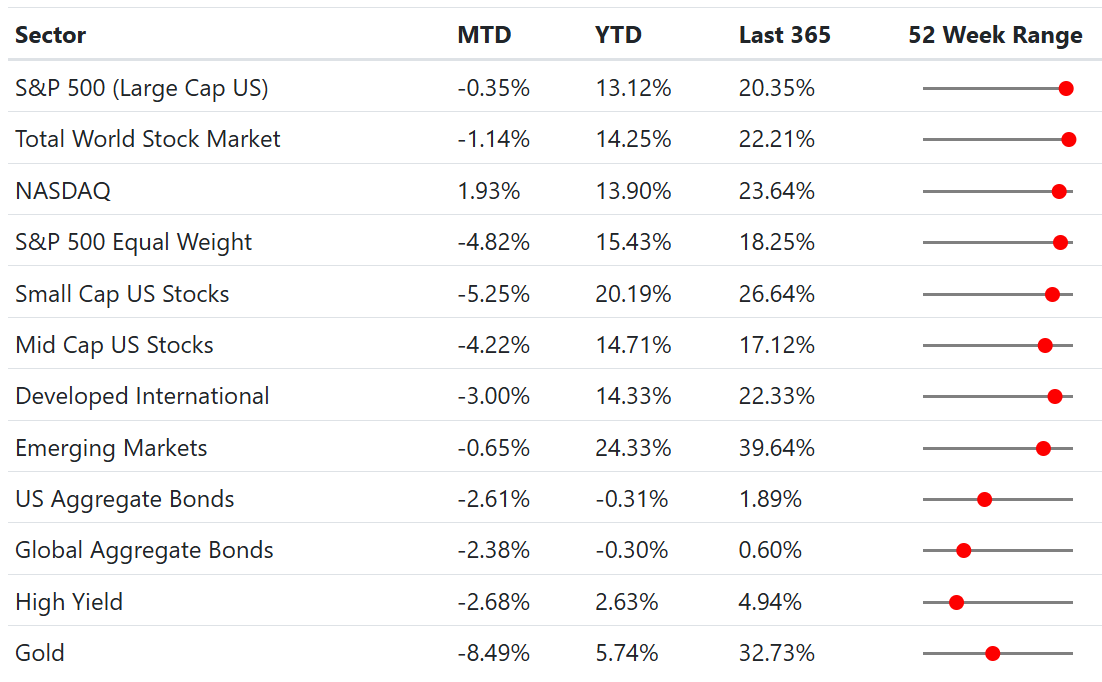
- The index held steady, but most stocks fell. The S&P 500 slipped 0.3%, propped up by large technology companies. The typical stock did much worse: the equal-weighted S&P 500 fell 4.8% and small caps fell 5.3%.
- The Fed raised rates for the first time since 2023. It lifted its benchmark rate by a quarter point to 3.75%–4.00%, and most officials expect one more increase before year-end.
- Bond yields reached their highest levels in nearly two decades. The 10-year Treasury yield climbed to 5.29%, U.S. bonds lost 2.6%, and mortgage rates moved above 7%.
- Oil kept inflation in focus. Brent crude spent much of the month above $100 a barrel as the Strait of Hormuz stayed largely closed. Gold fell 8.5% as higher rates made it less attractive to hold.
- (Post-month note, as of October 7): A weak September jobs report (29,000 jobs added, unemployment up to 4.2%) cooled expectations for another hike in October. The S&P 500 closed at a record high on October 6 as oil and Treasury yields eased, after the G7 agreed to release 100 million barrels of oil from reserves.
Data Dashboard
Stock Market
The S&P 500 slipped 0.3% in September. That small number hides a rough month. Rising interest rates were the main pressure: the Fed raised rates on September 16, oil stayed high, and long-term Treasury yields jumped. Stocks fell after the Fed's announcement as investors priced in more hikes. A handful of the largest technology companies kept the index close to flat.
Most stocks did not hold up nearly as well. The equal-weighted S&P 500, which gives every company the same weight, fell 4.8%. Small-cap stocks fell 5.3%, their worst month since March 2025. By month-end, 83% of S&P 500 companies were trading more than 10% below their 52-week highs, according to Nasdaq. Smaller companies tend to borrow more and refinance sooner, so they feel higher rates first. Overseas markets faced the same headwind. Developed international stocks fell 3.0% as bond yields rose around the world.
Technology (+5.1%) was the only sector to gain, and chipmakers led it. Investors bet that AI spending will lift demand well beyond Nvidia. AMD rose about 30% and passed $1 trillion in market value, and Intel gained about 34%. At the other end, Materials (-7.2%) fell the most as gold's slide pulled down mining stocks. Financials (-7.2%) were close behind. Only 15 of 203 U.S. banks tracked by S&P Global gained in September. Short-term rates rose about as fast as long-term ones, which squeezes what banks earn by lending. Rate-sensitive Real Estate (-6.5%) and Utilities (-5.9%) also lagged, along with Consumer Discretionary (-6.5%).
September Return Summary (by GICS Sector)
Bond Market
On September 16, the Fed raised its benchmark rate by a quarter point to 3.75%–4.00%. The vote was unanimous. It was the Fed's first increase since July 2023, and Chair Kevin Warsh described it as removing "a dose of accommodation." The message was that the Fed isn't finished: 16 of 18 officials projected at least one more hike this year. Inflation is still well above the 2% target, and with the economy growing, the Fed sees room to lean against it.
The 10-year Treasury yield rose from 4.75% to 5.29%, its largest monthly increase in four years. It crossed 5% for the first time since 2007 the day before the Fed's decision and kept climbing. The Fed was the main force, but high oil prices and heavy government borrowing added to it. When yields rise, existing bonds lose value, and September showed it: U.S. Aggregate Bonds fell 2.6% and Global Aggregate Bonds fell 2.4%. There is a silver lining. New bonds now pay the highest yields in nearly two decades, so future income is higher than it has been in years.
High Yield bonds fell 2.7%, nearly the same as investment-grade bonds. That tells us the losses came from rising rates rather than new worries about companies' ability to repay.
Economic Dashboard
Economics
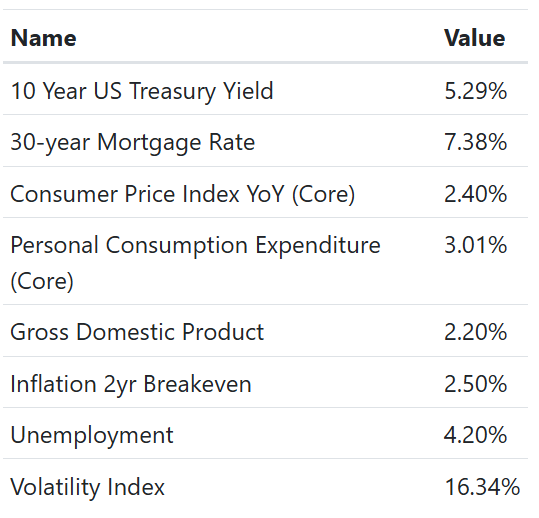
The economy looks sturdier than it did a month ago. Second-quarter growth was revised up to 2.2% from 1.5%, on stronger business investment and consumer spending. Hiring also bounced back. Employers added 162,000 jobs in August, triple what economists expected, and July's loss was revised to a small gain. A growing economy with steady hiring is what gave the Fed confidence to raise rates.
Inflation sent mixed signals. Energy is still the hot spot: gasoline prices rose 3.9% in August alone, and headline consumer prices were up 3.4% from a year earlier. Underlying inflation is cooling. Core CPI eased to 2.4%, and core PCE, the Fed's preferred gauge, dropped to 3.0% from 3.3%. Part of that drop reflects a change in how the government measures it, so we'd treat it as a modest improvement, not a turning point. Markets aren't fully convinced either. The 2-year breakeven, a market read on inflation over the next two years, rose to 2.50% from 2.37%.
Housing is feeling the rise in rates most directly. The 30-year mortgage rate ended September at 7.38%, up from 6.74% at the end of August. On a $400,000 loan, that adds about $170 to the monthly payment. Freddie Mac's weekly survey crossed 7% in late September for the first time since early 2025.
Portfolio Changes
We have kept our low vol tactical portfolio allocated exclusively to floating rate & low duration instruments since mid September, which has worked well in turbulent interest rate environment. In our tactical ETF portfolio, we have added positions in US Healthcare & Financials, while reducing our exposure to small cap stocks. We also swapped our Copper miners exposure for Gold miners.
Looking Ahead
Third-quarter earnings season begins in mid-October, led by the big banks. Their results will show how borrowers and lenders are coping with higher rates. The Fed meets again October 27–28, and investors will want to know whether September's hike was a one-time move or the start of a series. Oil remains the wild card: progress or setbacks in the Strait of Hormuz flow quickly into gas prices and inflation, and the midterm elections on November 3 follow shortly after. Months like this, when the headline index barely moves but most stocks fall, are exactly what a diversified portfolio is built for. As always, we're glad to talk through what it means for your plan.