

%20(720%20x%20225).jpg)
 More Blog Posts
July 2026 - Market Recap

.svg)

- Rising oil sent Energy stocks up nearly 12%, the best sector by a wide margin, while an unwinding of the AI trade dragged Technology down 8%. The S&P 500 ended essentially flat, down a fraction of a percent, but that calm surface hid one of the widest performance gaps between sectors in months.
- A renewed U.S.-Iran conflict pushed oil up roughly 20% for the month, reviving inflation worries and lifting Treasury yields. The 10-year climbed to about 4.74%, its highest level since early 2025.
- The Fed held rates steady but leaned hawkish. Three officials dissented in favor of a hike, and markets ended the month pricing in better-than-even odds of an increase at the September meeting.
- Q2 earnings came in strong, led by the big banks. With most of the S&P 500 reported, the beat rate and the size of the surprises were tracking among the best on record.
Data Dashboard
Stock Market
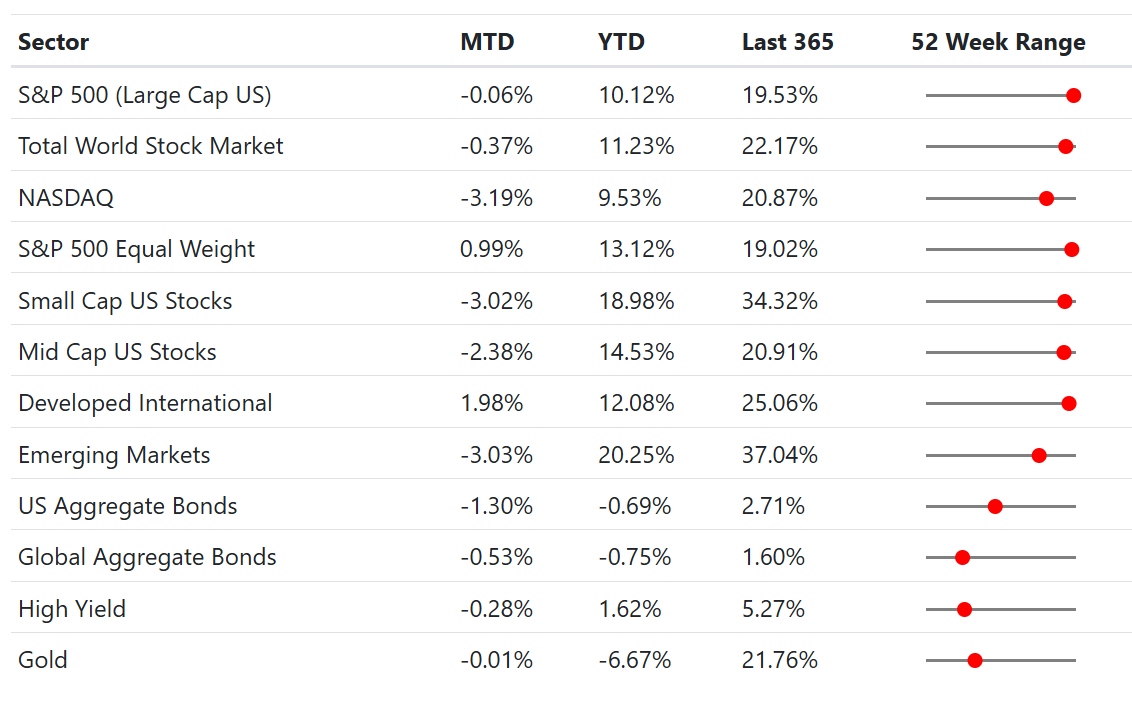
The S&P 500 finished the month marginally lower, but with a sharp divergence between the individual sectors. This was the index's first negative July in over a decade, and its second down month in a row.
The story was rotation, not decline. Energy led every other sector, gaining nearly 12% as a renewed conflict between the U.S. and Iran disrupted shipping through the Strait of Hormuz and pushed oil up around 20% on the month. Financials rose more than 6%, helped by a strong round of bank earnings and rising interest rates, which tend to widen lending margins. On the other side sat Technology, down 8% and alone at the bottom. The AI-chip complex, which had powered the market for the better part of two years, went into reverse as investors began questioning whether the enormous sums being spent on AI infrastructure would earn their keep. Memory-chip makers and the broader semiconductor group led the slide.
Earnings gave the month its firmer footing. The quarter opened with the large banks, and they set a confident tone. JPMorgan, Goldman Sachs, Bank of America, Wells Fargo, and Citigroup all reported the same morning, and the results were among the strongest the group has posted in years, with clean credit books and record capital-markets activity. As the technology giants followed later in the month, the market's attention narrowed to one question: whether hundreds of billions in planned AI spending is starting to pay off. With most of the S&P 500 having reported, the season was tracking one of the largest earnings surprises on record. The reason strong earnings didn't lift the index is worth naming. Because the S&P 500 is weighted by company size, the selloff in a handful of very large chip and hardware names outweighed gains almost everywhere else. The equal-weight version of the index, which treats every company the same, actually rose about 1% on the month. The average stock held up. The top-heavy market-cap weighted benchmark did not.
Overseas, developed international markets outperformed, with the developed-international index up about 2% against the flat U.S. tape. Emerging markets went the other way, falling roughly 3%, pressured by the same chip selloff that hit US technology, since several of the largest Asian markets are heavily weighted toward semiconductor manufacturers.
July Return Summary (by GICS Sector)
Bond Market
The Fed held its benchmark rate steady at 3.50%–3.75% at its late-July meeting, but the vote was contentious. Three officials dissented in favor of a hike, worried that inflation remains stubbornly above target, and Chair Kevin Warsh made clear the committee would not hesitate to raise rates if prices keep climbing. Markets took the message: by month-end, futures were pricing better-than-even odds of an increase at the September meeting. The 10-year Treasury yield rose to about 4.74%, its highest since early 2025, as the oil-driven jump in inflation expectations pushed long-term rates up.
Higher yields meant a tough month for bonds, whose prices fall as rates rise. US Aggregate Bonds lost 1.30% and Global Aggregate Bonds slipped 0.53%, leaving the domestic index modestly negative on the year. High-yield bonds held up better, down just 0.28%, a sign that investors remained comfortable with corporate credit even as government bonds sold off. The story was interest rates, rather thant credit stress.
Economic Dashboard
Economics
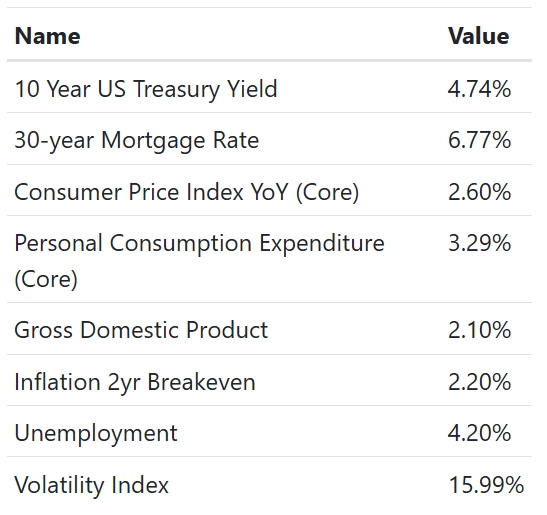
Growth is cooling. GDP was running at a 2.1% annualized pace, and while the economy is still expanding, the momentum has clearly faded from earlier in the cycle. Unemployment held at 4.2% through month-end, low by any historical standard, though the labor market has lost some of its earlier vigor. The picture is one of an economy that is slowing gradually rather than stalling.
Inflation is the knot the Fed can't quite untie. Core CPI held at 2.6% year-over-year and Core PCE, the Fed's preferred gauge, sat above 3%, both still above the 2% target. The June inflation report actually came in soft on the headline, helped by an earlier dip in energy prices, but July's oil surge threatens to push those numbers back up in the coming readings. That tension, cooling growth on one side and sticky inflation on the other, is exactly what left the Fed divided.
The wild card remains the Middle East. The renewed U.S.-Iran conflict that drove oil higher in July is both a geopolitical risk and an inflation risk, and it feeds directly into the rate outlook. Higher energy costs also weigh on households: the 30-year mortgage rate ticked up to 6.77%, keeping affordability stretched. Volatility, for its part, stayed calm. The VIX ended the month at 15.99, squarely in normal territory. For all the crosscurrents, investors were not panicking.
Portfolio Changes
In our Global Tactical ETF Portfolio, we swapped our Lithium & Battery Technology and Clean Energy for S&P Biotech and US Smallcap equities. In August we have also rotated out of MSCI South Korea in favor of Regional Banking stocks.
In our Low Vol Tactical portfolio, we reduced credit exposure, and are currently invested in floaters and short-duration ETFs.
The next batch of inflation data arrives mid-month and will show how much July's oil spike fed through to consumer prices, a reading the Fed will watch closely ahead of its September meeting, where a rate hike is now a live possibility. Nvidia's earnings, due late in August, will be the market's clearest test yet of whether the AI-spending story can steady the technology sector after July's slide. And the path of the U.S.-Iran conflict will keep a hand on both oil prices and market nerves. It's an environment that rewards staying diversified rather than chasing any single theme. As always, we're here to talk through what any of it means for your plan.
Thanks,
The Friedenthal Financial Team.